

DREAMT ENOUGH. FIX DEADLINES NOW
India cannot live on 2047 promises. Budget 2026 must deliver jobs, incomes, purchasing power and accountability now, not postpone prosperity or silence public impatience
DREAMT ENOUGH. FIX DEADLINES NOW
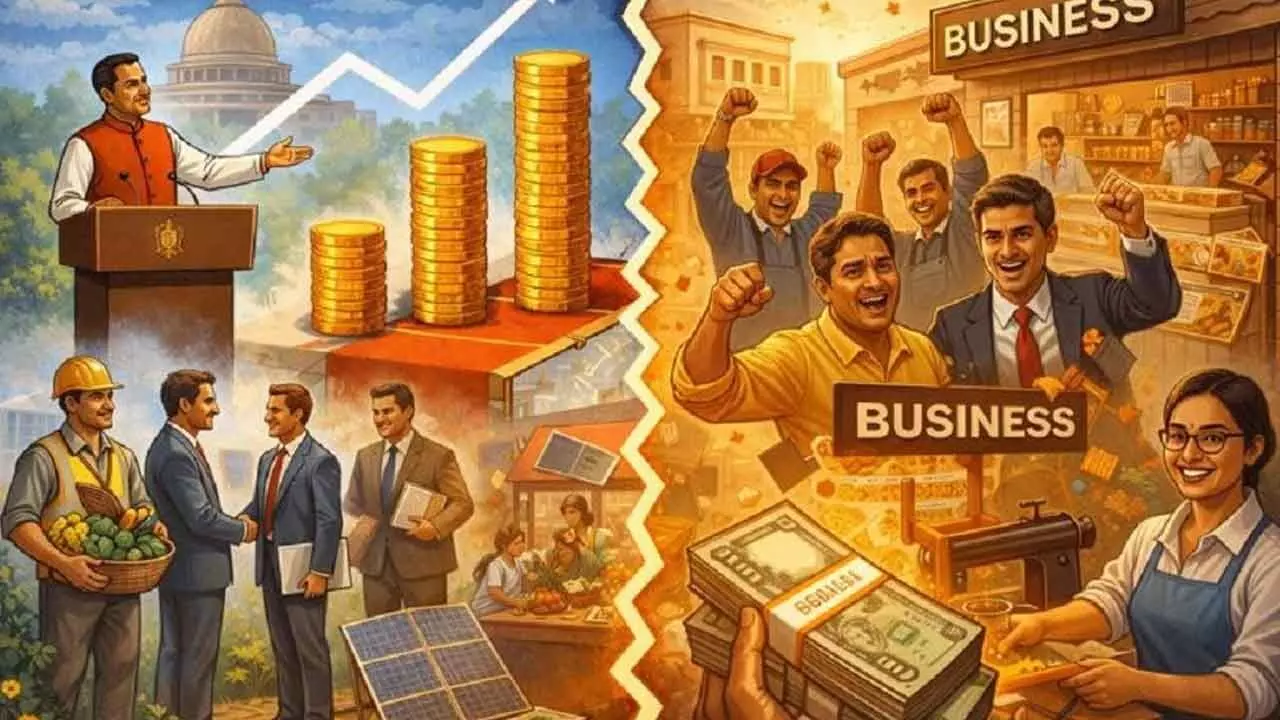
India’s ambition to become a Viksit Bharat by 2047 is widely shared and rarely disputed. But as the Union Budget approaches, the real test before policymakers is far more immediate: can this Budget meaningfully improve livelihoods, jobs, incomes, and business conditions now? For a country of 1.4 billion people, development cannot remain a deferred promise.
Aspirations lose credibility when everyday realities — employment insecurity, squeezed household budgets, business friction, environmental stress, and uneven access to health and education — remain unresolved year after year. A forward-looking vision matters, but delivery in the present matters more.
The national mood today is not anti-growth or anti-reform. It is impatient for outcomes. Some express this impatience loudly, while many have learnt the art of silent tolerance. For them, governments of any political colour make little difference. Winning elections on the basis of last-minute freebies should not make governments complacent about performance. Governments must first be accountable to themselves, and then to the people.
India’s macroeconomic story often draws validation from global institutions such as the IMF and multilateral agencies. While these assessments have value, they are largely built on aggregate government-supplied data and broad macro indicators.
They capture momentum, not lived experience. What matters more is per capita income and purchasing power. High GDP growth rates offer limited comfort if disposable incomes are under strain, consumption remains cautious, and informal employment dominates large parts of the economy. Growth that does not translate into improved household confidence risks becoming fragile.
The Finance Minister’s challenge, therefore, is not merely to manage international perception, but to anchor fiscal strategy in domestic economic reality. Budgets must respond to how growth is actually felt on the ground — across towns, cities, and villages.
Across sectors, a consistent message is emerging: businesses are not demanding dramatic policy reinvention. What they seek is regulatory clarity, stable rules, and smoother execution. Several constraints slowing trade, exports, and manufacturing are relics of an earlier regulatory era. Overlapping compliance requirements, manual processes, and risk frameworks that ignore technological advances continue to add cost without proportionate public benefit.
In logistics, express delivery, and cross-border e-commerce, industry stakeholders argue that risk-based, data-driven regulation could unlock efficiency and employment almost immediately. The tools exist. What is missing is systematic adoption.
Reform announcements are no longer enough. Implementation is now the growth multiplier. Employment remains India’s most pressing economic concern. But the debate has evolved. The issue is no longer just creating jobs in large numbers, but creating stable, productive, future-ready employment.
High-growth sectors such as fintech, digital services, logistics, and advanced manufacturing are expanding, yet face persistent skill mismatches. Employers struggle to find talent that understands both technology and compliance.
Industry expectations from the Budget converge around a few clear asks: closer alignment of Skill India programmes with industry demand, incentives for industry–academia partnerships, and support for apprenticeships, reskilling, and on-the-job training. Job creation cannot be treated as an automatic by-product of GDP growth. It must be designed into policy choices.
Micro, Small and Medium Enterprises remain India’s largest employment engine — and its most exposed. While infrastructure spending boosts demand, MSMEs continue to face credit constraints, delayed payments, and uneven regulatory treatment.
NBFCs and lenders point out that smoother refinancing mechanisms, predictable tax treatment, and a level playing field in recovery frameworks could materially improve credit flow to small businesses. Stronger MSMEs translate directly into local jobs, export capacity, and supply-chain resilience. This is not a call for subsidies, but for removing structural bottlenecks that restrict enterprise growth.
Economic growth becomes meaningful only when households feel confident to spend. Persistent market volatility, inflationary pressures, and uncertainty around taxation have made consumers cautious. Both investors and households are seeking policy stability rather than surprise — especially in areas such as capital gains taxation and long-term savings.
A Budget that protects household balance sheets and restores confidence will support consumption more sustainably than short-term stimulus measures. Purchasing power is not a secondary concern; it is central to economic durability.
The real estate industry rightly says Budget 2026 must correct the imbalance created by a surge in high-end housing and actively enable affordable homes, which remain the core aspiration of most Indian families.
The social safety net has been crucial during economic shocks. But a nation that feeds free rations to nearly six out of ten Indians cannot be described as truly developed. When 60% of households rely on subsidised food or social transfers year after year, it points to deeper structural challenges.
Shrinking household savings compound this vulnerability, with families dipping into reserves to meet basic expenses. In this context, the sharp rise in gold-backed borrowing is a warning sign.
Gold and land have traditionally been India’s prime stores of wealth, passed down generations as security against adversity. Yet Reserve Bank of India data shows outstanding gold loans have crossed Rs3.3 lakh crore, growing at well over 100% year-on-year and far outpacing overall credit growth.
This reflects increasing dependence on mortgaging household gold to meet liquidity needs. The contradiction is striking: while governments globally are adding to gold reserves, households are being encouraged to part with their own.
Gold loans may appear attractive — quick disbursal and lower interest rates than unsecured credit. But convenience should not be mistaken for sustainability. If a business or consumption decision financed through such borrowing fails, the loss is not limited to income or enterprise.
The family’s last line of financial defence — its gold — can vanish. What was meant to cushion adversity becomes collateral damage of short-term ambition.
India’s infrastructure push enjoys broad consensus, but emphasis must shift from allocation to execution quality. In railways, ports, logistics corridors, and urban transport, faster approvals, better coordination, and timely completion matter as much as budgetary outlays.
Delays dilute both economic impact and public confidence. Infrastructure delivers growth only when assets are completed, connected, and operational — not merely announced.
Every year, states sign Memoranda of Understanding worth lakhs of crores of rupees at investor summits. Major states such as Uttar Pradesh, Maharashtra, and Gujarat routinely showcase impressive commitments. These efforts are necessary and should not be dismissed.
But a legitimate question remains: how much of this promised investment has actually materialised? Had even a substantial share translated into operational projects and jobs, India would arguably have reached developed-economy benchmarks long ago. The persistent gap between announcements and outcomes weakens credibility.
It is time to institutionalise transparency. Before hosting new investor summits, states should publish a progress card detailing earlier MoUs, projects implemented, investments realised, and jobs created.
The Centre should insist on such disclosures and incorporate them into the pre-Budget Economic Survey. This would provide a more honest snapshot of the economy and shift the focus from promises to performance.
A developed economy is defined not just by output, but by quality of life. It is no coincidence that many Indians seek opportunities in the US, Australia, New Zealand, and Gulf countries. Healthcare access, education standards, clean energy, and environmental resilience are not welfare add-ons; they are economic enablers.
Climate stress, flooding, pollution, and environmental degradation already impose real costs on productivity and public health. Underinvestment in preventive healthcare and education quality undermines long-term competitiveness.
Budgets that integrate health, education, and climate resilience into growth strategy invest in future productivity — starting now. India does not suffer from a lack of vision. We have seen enough of it. What it lacks is urgency of delivery. The promise of a Viksit Bharat by 2047 will resonate only if citizens experience visible improvement in their daily lives today.
Budgets are annual instruments, and their credibility should be judged by what they resolve now, not what they promise or postpone. Jobs, incomes, ease of doing business, healthcare, education, environmental security, and household confidence cannot wait two decades.
The nation wants progress — now. A credible pathway to 2047 begins with decisive action in this Budget. Above all, respect public opinion, read the national pulse, and do not brush aside criticism or force silence. That may offer temporary comfort, but it will never deliver lasting progress.
(The columnist is a Mumbai-based author and independent media veteran, running websites and a youtube channel known for his thought-provoking messaging.)





